
WELCOME BONUS 300%
UP TO €2000 + 100
FREE SPINS
UP TO €2000 + 100
FREE SPINS
Home → Games
Casino games at Zetcasino
37 vs. 38 Sectors: One Zero Difference
European Roulette operates with 37 sectors including a single zero, establishing a constant house edge of 2.70% on all bet types. This configuration yields an RTP of 97.30%, which is lower than games using more decks or favorable rules. The fixed edge applies uniformly to Straight bets paying 35:1 and even-money wagers like Red or Black.
American Roulette typically utilizes 38 sectors by adding a double zero, increasing the house advantage to approximately 5.26%. This additional sector reduces the player's theoretical return significantly compared to the European variant's 97.30% RTP. The presence of two zeros alters probability calculations for every wager placed on the wheel during gameplay.
The mathematical difference between 37 and 38 sectors directly impacts long-term bankroll sustainability for table game enthusiasts. A higher house edge means faster depletion of funds over thousands of spins in the American version. Players seeking better odds should prioritize tables featuring only one zero to minimize the casino's statistical advantage.
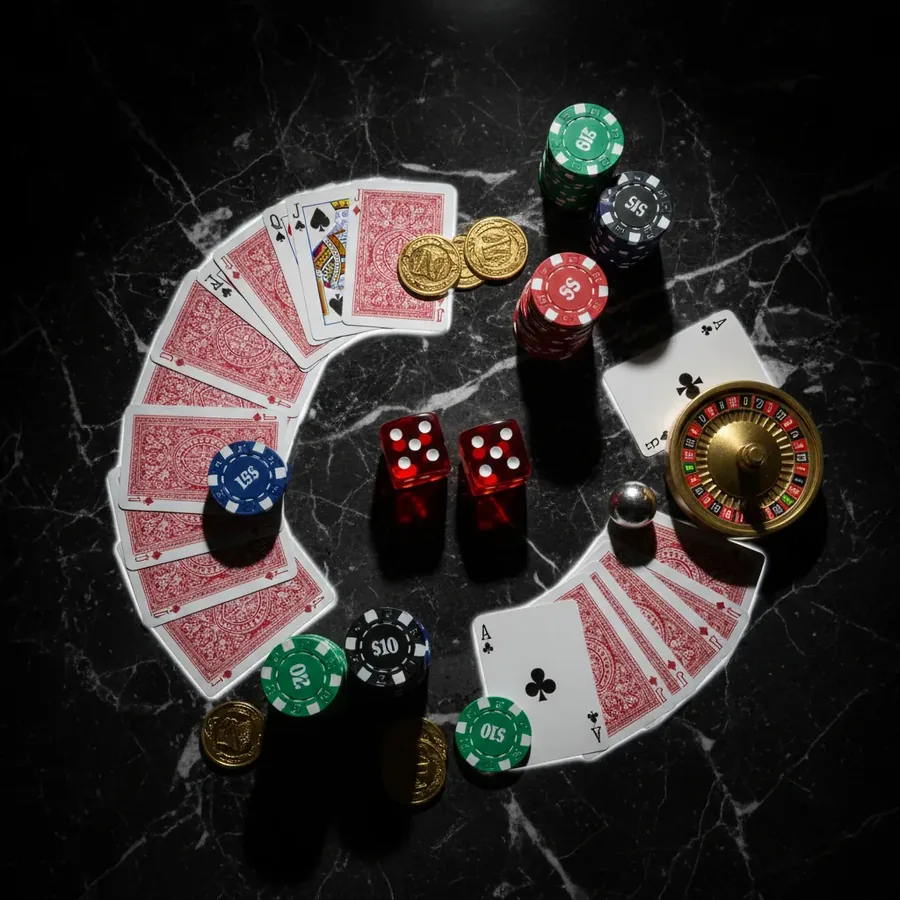
Table Games Often Count Only 10 Percent
Tischspiele contribute exactly 10 percent toward the bonus turnover requirement of the 300% welcome bonus up to €2,000 plus 100 free spins. This low contribution rate contrasts sharply with Slots, which count for 100 percent of the wagering obligation. Players must deposit larger amounts to clear the bonus when playing card or dice games exclusively.
A €100 wager on Casino Hold'em Ante + Call generates only €10 toward meeting the wagering criteria due to the 10% contribution rule. This mechanism slows down bonus release significantly compared to high-contributing slot titles. The restriction ensures that players cannot easily convert the bonus into withdrawable cash through low-variance table strategies.
Understanding this contribution percentage is crucial for managing expectations regarding the €2,000 maximum bonus potential. Since Table Games count at 10%, players need ten times the wager volume compared to slots to fulfill requirements. This structural difference favors slot players who can clear bonuses faster through standard gameplay loops.
House Edge and RTP: Two Names for the Same Number
RTP stands for Return to Player, representing the theoretical long-run average percentage of wagered money paid back to players over time. House edge is simply the complement of RTP, calculated as 100% minus the RTP value. For example, Blackjack Ein Deck with 99.85% RTP has a house edge of 0.15%, indicating minimal casino advantage.
Baccarat Banker offers an RTP of 98.94%, resulting in a house edge of 1.06% after accounting for the 5% commission on wins. This makes it one of the most statistically favorable bets available in live casino environments. The effective payout of 0.95:1 reflects the commission structure inherent in this specific game variant.
Video Poker Jacks or Better 9/6 provides an RTP of 99.54% with optimal strategy, yielding a house edge of 0.46%. This figure demonstrates how skill-based decisions can significantly reduce the casino's mathematical advantage. Players adhering to perfect strategy maximize their expected return while minimizing long-term losses per hand played.
Craps Odds Bet with 0 Percent House Edge
Craps Don't Pass bets carry a house edge of 1.36%, offering an RTP of 98.64% for participants. This wager performs slightly better than the standard Pass Line bet due to favorable outcomes on specific roll numbers. The game features complex betting options that influence overall volatility and expected returns for the player base.
The Standard Deviation of 0.99 for Craps Don't Pass indicates moderate variance compared to other table games like Video Poker. Lower deviation suggests more frequent but smaller payouts, stabilizing bankroll fluctuations during extended play sessions. This metric helps players gauge risk levels when choosing between different craps betting strategies.
Odds bets behind the initial Don't Pass line carry zero house edge, effectively reducing the combined cost of play. While the main bet retains its 1.36% advantage, supplementary odds wagers pay true odds without casino markup. Combining these elements allows skilled players to optimize their total exposure against the house statistical advantage.
RNG Roulette vs. Live Table: Four Clear Differences
RNG Roulette uses a Random Number Generator to determine outcomes, ensuring independence between spins without physical wheel mechanics. The RTP remains 97.30% for European versions, matching live dealer equivalents in terms of mathematical expectation. However, the speed of play differs significantly due to automated processing versus human croupier operations.
Live Dealer Roulette involves real-time streaming from studios, introducing slight delays between bet placement and result announcement. This format maintains the same 2.70% house edge but alters pacing compared to digital RNG counterparts. Players experience social interaction absent in virtual games, affecting perceived entertainment value despite identical underlying probabilities.
Sic Bo Spezielle Einsätze demonstrate high variance with RTPs ranging from 81.48% to 92.13% depending on bet type. Specific Triple bets offer 180:1 payouts but carry an 18.52% house edge, contrasting sharply with Single Number bets at 7.87% edge. These variations highlight how game selection impacts risk profiles across different casino categories.
Game categories at a glance
| Category | Examples | Stakes From | Highlight |
|---|---|---|---|
| Slots | Buffalo Power: Hold and Win, Money Train 3, Chaos Crew | 0,10 EUR | thousands of titles |
| Table games | Roulette, Blackjack, Baccarat | 0,50 EUR | classic rules |
| Live casino | Blaze Roulette, Sweet Bonanza CandyLand | 0,20 EUR | real dealers |
| Jackpot games | Mega Moolah, Divine Fortune, Age of the Gods | 0,20 EUR | progressive pools |
| Instant games | Aviator, Plinko, Mines | 0,10 EUR | fast rounds |
| Video poker | Jacks or Better, Deuces Wild | 0,25 EUR | strategy based |
Casino Hold'em: Ante Payout Up to 100:1
Casino Hold'em Ante payouts range from 1:1 for a Straight up to 100:1 for a Royal Flush, providing significant rewards for strong hands. The game utilizes standard rules where the player sets an Ante and decides whether to Call with double the amount or Fold after seeing the Flop cards. This structure allows skilled players to maximize returns on premium combinations while minimizing losses on weak starting deals.
The expected return for this variant is 99.18% per full cycle, which translates to a house edge of 2.16% calculated specifically on the Ante wager. However, the real risk element drops to 0.82% because the average total stake reaches 2.64 times the initial Ante bet. This mathematical distinction highlights how the effective house advantage shrinks when accounting for the mandatory Call portion of every active round.
Players must adhere to strict strategy, as folding when the dealer holds a pair lower than 4 results in a push rather than an immediate loss. The Dealer qualification rule ensures that only hands meeting minimum criteria trigger the main payout comparison against the Player's Call bet. Understanding these mechanics helps manage bankroll expectations during extended play sessions at the table.
Dozen 2:1: Twelve Numbers, One Third Coverage
European Roulette offers a Dozen bet paying 2:1, covering twelve numbers across three distinct columns of the layout grid. This wager provides one-third coverage of the thirty-seven sectors, balancing risk with consistent frequency of small wins during gameplay. The constant house edge applies uniformly to all external bets, ensuring predictable long-term mathematical expectations for participants.
The house edge stands at 2.70%, derived from the discrepancy between true odds and the fixed 2:1 payout ratio on winning dozens. Unlike inside bets such as the Straight which pays 35:1, this option reduces volatility significantly while maintaining steady engagement with the wheel spins. Players often use this coverage to sustain bankrolls through longer sessions without exposing funds to high-variance outcomes.
Standard deviations remain moderate compared to single-number wagers, making this a preferred choice for conservative betting strategies and progressive systems. The Even Money bets like Red/Black share the same 2.70% edge but offer different risk profiles due to their fifty-fifty probability distribution. Analyzing these variances helps gamblers select appropriate stakes based on their personal tolerance for financial fluctuation over time.
Baccarat commission: 5 percent on each Banker win
Baccarat Banker bets incur a five percent commission on all winning outcomes, effectively reducing the payout from 1:1 to 0.95:1 for successful wagers. This fee compensates for the inherent statistical advantage the Banker position holds due to specific drawing rules applied during the third card phase. Despite the deduction, the house edge remains exceptionally low at 1.06%, making it the most favorable primary wager available.
The theoretical return to player for this specific bet is 98.94%, surpassing the Player bet which carries a slightly higher 1.24% house edge. Standard deviation measures at 0.93, indicating relatively stable variance compared to other casino table games involving similar decision structures. The commission structure ensures the casino maintains its margin while still offering competitive odds to informed participants at the shoe.
Tie bets present a stark contrast with an 85.64% RTP and a massive 14.36% house edge, discouraging reliance on these high-risk options. While the Tie pays 8:1, the probability of occurrence makes it statistically unsound for long-term profitability strategies among serious gamblers. Focusing on the Banker position with its adjusted payout yields superior results over thousands of hands dealt at the table.
How Much Does One Mistake Cost in 100 Hands?
Mistakes in Blackjack with six decks and S17 rules can increase the house edge from the optimal 0.46% to significantly higher levels depending on error severity. Each deviation from basic strategy introduces additional variance, potentially costing players extra chips over hundreds of hands played continuously at the virtual table. Precise adherence to recommended moves is essential for maintaining the lowest possible disadvantage against the dealer's upcard.
Insurance bets represent a common strategic pitfall, carrying a 7.47% house edge that drastically erodes overall profitability if used indiscriminately by inexperienced players. Accepting insurance when the true count is below +3 violates optimal strategy and adds unnecessary cost to every hand where the dealer shows an Ace. Avoiding this side bet preserves the integrity of the base game's mathematical expectation for those seeking consistent returns.
Surrender options like Late Surrender improve RTP by approximately 0.08 percentage points, offering a valuable tool to minimize losses on poor starting hands. Using surrender correctly when mathematically indicated reduces the impact of bad beats, whereas ignoring it leads to avoidable defeats over extended playing periods. Combining proper surrender usage with perfect basic strategy maximizes the 99.54% return potential inherent in this specific blackjack variation.
Connection Lost in Table Game: Round Continues Automatically
Sic Bo Special Bets involve complex outcomes like Specific Triples paying 180:1 or Any Triples returning 30:1, requiring stable connections for accurate resolution. If connectivity fails during dice rolls, the system typically pauses or auto-resolves based on pre-established server timestamps to ensure fair outcome determination. Players relying on these high-payout wagers should monitor connection stability to avoid disputes regarding bet placement timing before the roll occurs.
Roulette European wheels spin rapidly, and bets placed just before connection loss might be processed differently depending on server synchronization protocols during critical moments. The 2.70% house edge applies regardless of technical issues, but unresolved rounds could temporarily suspend further action until the session reconnects successfully. Understanding these operational safeguards helps users trust that their financial exposure remains protected even during unexpected network interruptions throughout the gaming day.
Video Poker Jacks or Better requires precise hold/discard decisions, and disconnections might force re-evaluation of optimal strategy upon restoration of service. With a 99.54% RTP under full pay conditions, any interruption preventing timely submission of choices could alter the final hand composition unexpectedly. Maintaining robust internet links ensures that players can execute complex multi-coin strategies without risking accidental forfeits or miscalculated royal flush bonuses.
37 vs. 38 Sectors: What the Double Zero Costs
European Roulette features thirty-seven sectors with a single zero, resulting in a house edge of 2.70 percent and an RTP of 97.30 percent across all wagers. This constant edge applies to straight bets paying 35:1 and split bets paying 17:1, as payouts are calculated for thirty-six numbers rather than the actual count. The mathematical advantage remains identical for dozens and columns, which both return 2:1 on winning outcomes regardless of the specific sector bet placed by the player.
The American variant introduces a double zero, creating thirty-eight sectors and increasing the house edge to approximately 5.26 percent on standard outside bets like red or black. This additional pocket lowers the theoretical return significantly compared to the European version, where the single zero preserves the 2.70 percent margin. Players betting on combinations such as six-line bets receiving 5:1 odds face a higher expected loss rate due to the expanded wheel layout.
Roulette Europäisch maintains its 2.70 percent house edge because payouts match thirty-six sectors despite the presence of only one zero on the wheel. The Straight bet pays 35:1, while Split bets pay 17:1, ensuring the casino retains its fixed percentage over time. This structural consistency means that no matter the wager type, the long-term expectation remains anchored to the twenty-seven point three zero percent retention rate.
Four Blackjack Hand Decisions at a Glance
Blackjack Split allows players to divide pairs into separate hands, with rules permitting up to four hands and resplitting Aces often restricted to one card each. The decision to split depends heavily on the specific rule set, such as whether doubling after split is allowed, which improves the RTP by approximately 0.14 percentage points. Players must evaluate these modifiers against the base strategy to maximize their return from each individual hand created during the deal.
Double Down options enable players to double their initial stake when holding strong starting cards, typically yielding a higher expected value than hitting or standing. In liberal games, doubling after split becomes available, further enhancing the overall return by about 0.14 percentage points compared to restrictive variants. This mechanic increases volatility but offers a strategic tool to capitalize on favorable two-card totals against weak dealer upcards.
Surrender rules provide a late option to forfeit half the bet after checking for dealer blackjack, reducing the house edge by 0.08 percentage points. This feature is particularly valuable against stiff hands like sixteen against a ten, allowing players to minimize losses without drawing another card. Early surrender is rarer and more beneficial, potentially lowering the edge by up to 0.6 percentage points, though it is seldom offered in modern venues.
Insurance is a side bet paying 2:1 when the dealer shows an ace, carrying a steep house edge of 7.47 percent and an RTP of 92.53 percent. Basic strategy dictates always rejecting this wager unless counting cards indicates a true count of plus three or higher. For the average player, the insurance bet represents a significant mathematical disadvantage compared to the main game, where edges range from 0.15 to 0.46 percent depending on rules.
When is Splitting Aces and Eights Sensible?
Splitting Aces grants the player two new chances to hit blackjack, with most casinos restricting subsequent hits to exactly one additional card per ace. This rule modification impacts the overall game return, as resplitting aces can improve the RTP by 0.08 percentage points in favorable environments. The strategic necessity stems from the high probability of forming strong hands from low-value starters, making the split mathematically superior to standing on soft seventeen.
Eights represent a difficult total of sixteen, prompting splits to avoid busting risks while leveraging the dealer's potential weakness on upcards seven through nine. The decision aligns with basic strategy frameworks that prioritize minimizing expected loss over maximizing immediate win probability in volatile situations. When combined with rules allowing double after split, the overall house edge decreases by 0.14 percentage points, enhancing the long-term viability of this tactic.
Rule variations significantly influence the profitability of splitting strategies, with soft seventeen dealer rules adding 0.22 percentage points to the house edge. Conversely, allowing double after split reduces the edge by 0.14 percentage points, directly affecting the optimal play for pairs like eights. Players must adapt their approach based on whether the table permits resplitting, as this capability alters the fundamental mathematics behind every pair division decision made at the felt.
The availability of six decks versus eight decks modifies the baseline house edge by approximately 0.02 percentage points, slightly favoring fewer deck games. This minor adjustment interacts with splitting decisions, as card removal effects become more pronounced in single-deck scenarios compared to multi-deck shoes. Understanding these nuances ensures that players apply correct basic strategy, thereby preserving the theoretical return rates established by the specific game rules provided.
Columns and Dozens Pay 2:1 in Roulette
Column bets in European Roulette cover twelve numbers and pay 2:1, offering a consistent return ratio aligned with the thirty-seven sector wheel structure. This payout matches the dozen bets, which also cover twelve numbers and maintain the same 2:1 odds for successful outcomes. Both wager types contribute to the uniform 2.70 percent house edge inherent to the single-zero configuration, providing predictable variance for players preferring even-money style returns.
Dozen bets function identically to column bets in terms of payout structure, covering the first, second, or third groups of twelve numbers respectively. Each successful wager yields a 2:1 return, reinforcing the mathematical symmetry between horizontal and vertical betting options on the layout. The consistency in payout ratios ensures that the house retains its fixed percentage across all outside bets, regardless of whether the player selects a column or a specific dozen group.
The Straight bet pays 35:1, creating a stark contrast to the 2:1 returns of columns and dozens, yet both share the same underlying house edge. This disparity highlights how payout multiples compensate for varying probabilities, with lower-paying bets covering more numbers and higher-paying bets covering fewer. The Roulette Europäisch framework maintains this balance, ensuring that every possible outcome contributes equally to the 2.70 percent retention rate over infinite spins.
Plein Pays 35:1, Cheval Pays 17:1
Plein, known as a straight bet, covers a single number and pays 35:1, reflecting the low probability of hitting one specific sector out of thirty-seven. This high payout corresponds to the lowest coverage area on the roulette table, balancing risk with reward through a fixed multiplier applied to the stake. The 35:1 ratio ensures that the house edge remains constant at 2.70 percent, matching the returns of other external wagers despite the vastly different hit frequencies.
Cheval, or split bets, cover two adjacent numbers and pay 17:1, effectively doubling the coverage area while halving the payout multiple compared to straight bets. This structure maintains the mathematical equilibrium required for the 2.70 percent house edge, as the increased probability of winning is offset by the reduced prize amount. Players utilizing split bets benefit from broader coverage than single-number wagers, though the expected value per unit wagered remains identical to other standard roulette options.
The Street bet covers three numbers and pays 11:1, continuing the pattern where payout multiples decrease as coverage areas expand across the wheel. This progression ensures that all bets, from Plein at 35:1 to Corner bets at 8:1, converge on the same 2.70 percent house edge in European Roulette. The systematic design guarantees that no single wager type offers a mathematical advantage, preserving the casino's long-term retention rate across all betting styles.
Contact
Live - online chat
Banking






Providers






Zetcasino 2026